


Strategic Defense.
Former Prosecutor.
Early Intervention.
Protecting Your Future.
Proven Defense Against Criminal Charges With Former ProsecutorIn Tampa, Florida
A robbery case usually turns on two questions police reports can never settle: who took the property? and was force or fear truly involved?
If you or a loved one has been arrested for robbery in Tampa, you are facing a high stakes felony charge. At McCulloch Law, P.A., our experienced robbery defense attorney tampa protects your freedom using an aggressive, proactive approach. Led by a former Tampa Assistant State Attorney with over 100 cases tried to a verdict, we know exactly how the prosecution thinks and where to look for weaknesses in their evidence.
Defense Attorney
Legal Representation
State Attorney
& Freedom from Day One
Facing Robbery Charges in Tampa? Get a Free, Confidential Case Review
Prosecutors are already building a file on your case. One free call with McCulloch Law can start a defense strategy to clear your name and protect your future.
Free Consultation
No fees. No obligations.
100% Confidential
Your privacy is fully protected.
Speak Directly to Attorney
No intake reps. Talk to Drew McCulloch directly.
Immediate Response
Available 24/7 before formal charges land.
What Is Robbery Under Florida Law?
Florida Statutory Definition of Robbery

Force and Fear vs. Theft
The main difference between a "robbery" and a crime of "theft" is whether or not force and the use of the victim's fear were involved during the act. One need not hit the victim or cause physical injury, however, a victim needs only to prove there was physical force, a threat or assault or putting them in fear of bodily harm, during the alleged act.
Broad Scope: “In the Course of the Taking”
Florida law also defines the phrase "in the course of the taking" very broadly. This includes any physical force, violence, assault or intimidation used before, during or after the property was taken in a manner which can be viewed as a continuous event. This also applies to attempted robbery and any flight after any attempted or completed attempted take. An example of attempted shoplifting turning into a robbery is when the shoplifter pushes or hits a store clerk while running out of the store.
Robbery vs. Theft: What’s the Difference?
While people often use these terms interchangeably, Florida law treats them as entirely separate offenses.
| Characteristic | Robbery (Fla. Stat. § 812.13) | Theft (Fla. Stat. § 812.014) |
|---|---|---|
| Definition | Taking property directly from a person by using force, violence, assault or putting them in fear. | Unlawfully taking someone else's property with the intent to deprive them of it. |
| Crime Classification | Always a high level felony, regardless of whether the stolen item is worth $1 or $10,000. | Can be a misdemeanor (Petit Theft) or a felony (Grand Theft) depending on the property's value. |
| Victim Presence | The property must be taken directly from the victim's person or their immediate custody. | The victim does not need to be present or even aware (e.g., stealing a bicycle from a yard). |
| Use of Force/Fear | Force, violence or threats are required to complete the taking or to escape. | No force or fear is used. It relies on stealth, deception or opportunity. |
| Presence of a Weapon | Carrying a weapon escalates the charge to Armed Robbery, carrying up to life in prison. | If a weapon is carried, it escalates to grand theft but lacks the elements of personal confrontation. |
Types of Robbery Cases We Defend
Florida law recognizes several robbery offenses and related allegations involving property, vehicles, weapons and resistance during a theft investigation.

1. Strong Arm Robbery
Strong arm robbery generally describes a robbery involving physical force, intimidation or threats without an allegation of a firearm or other weapon. Charge reliance on claims of pushing, grabbing, striking, restraining or threatening a person during a property taking. A visible injury does not determine whether the State can establish robbery. Witness testimony, surveillance footage, medical records and the sequence of events may all affect the case.

2. Armed Robbery
Armed robbery involves an allegation of a weapon, firearm or deadly weapon during the property taking. Florida Statutes § 812.13 distinguish between a firearm or deadly weapon and another weapon. The type of object and its alleged use can affect the charge classification. Police do not always recover the alleged weapon. However, the State must establish the relevant weapon allegation through admissible evidence.

3. Robbery by Sudden Snatching
Florida Statutes as when "a person takes money or property of any other person from the person or in the presence of such other person when in the course of such taking such other person is actually or apparently in fear of being the victim of a robbery and the defendant has no intent to permanently deprive such person of such property." This type of theft can involve the taking of property if the person thought or was told by the victim that a person snatched the property or money.

4. Home Invasion Robbery
Florida Statutes § 812.135 define home invasion robbery as entering a dwelling with the intent to commit robbery and then committing robbery against an occupant. The allegation involves both entry into a dwelling and a property taking through the legally required force, violence, assault or fear.

5. Carjacking
Florida Statutes § 812.133 define carjacking as taking a motor vehicle from another person's possession or custody through force, violence, assault or fear, with the intent to deprive the owner temporarily or permanently. Carjacking involves a motor vehicle.
6. Federal Level Robbery
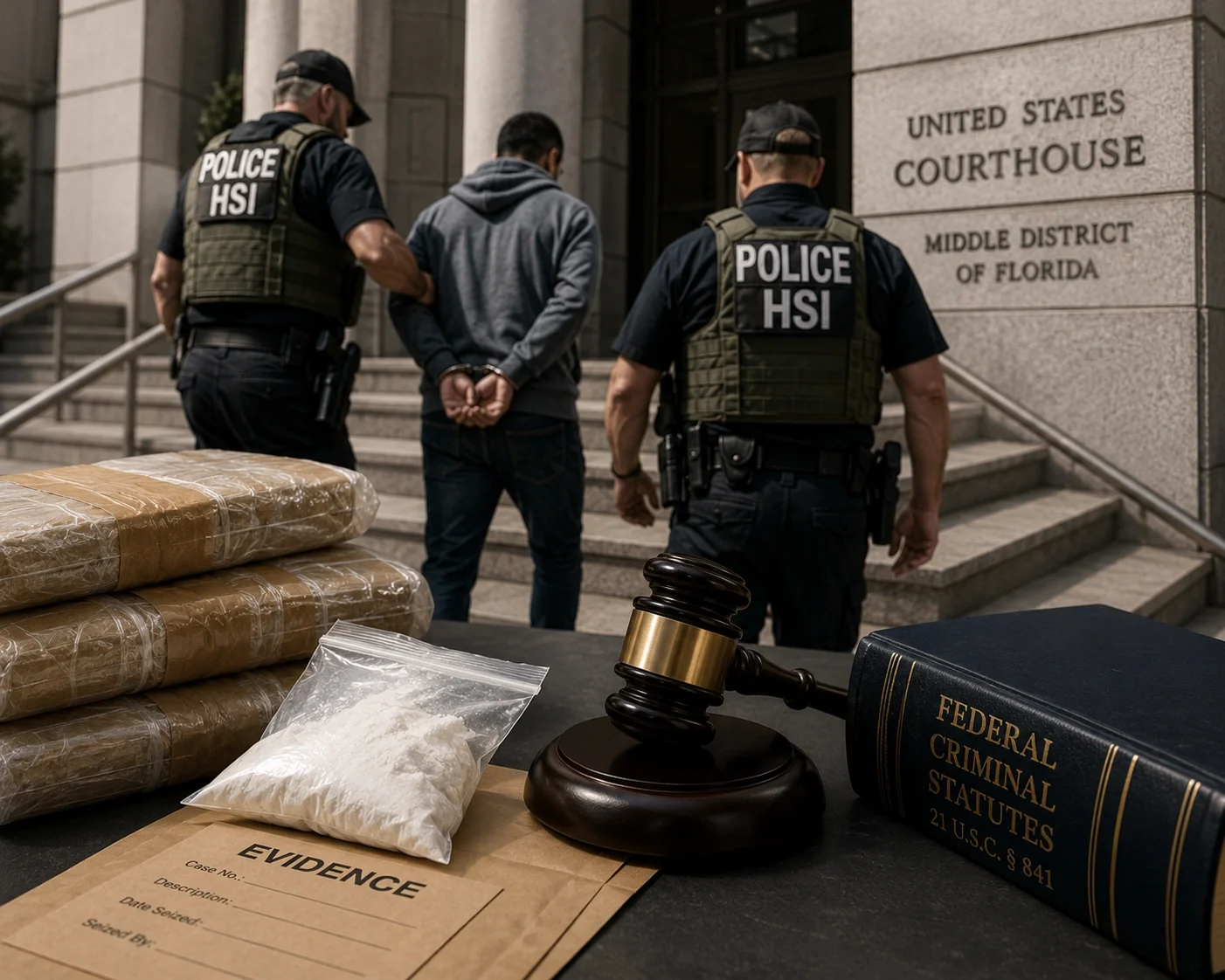
Some acts of robbery are prosecuted under federal criminal law. In some cases, the conduct alleged may be the basis for federal prosecution because the crime charged is made illegal by a federal statute. Under the Hobbs Act, 18 U.S.C. § 1951, robbery or attempted robbery affecting interstate commerce are subject to federal prosecution. Federal bank robbery is prosecuted under the federal bank robbery statutes set out at 18 U.S.C. § 2113. Federal investigations are conducted by the Federal Bureau of Investigation, federal prosecutors or others. The case would be heard in the United States District Court, Middle District of Florida.

7. Resisting a Merchant
Florida Statutes § 812.015(6) address resisting a merchant during efforts to recover property after an alleged theft. The statute covers resistance to reasonable efforts by a merchant, merchant's employee, law enforcement officer or another authorized person. For example, a store employee may attempt to recover merchandise after an alleged retail theft. An argument, physical resistance or refusal to cooperate during the recovery attempt may lead to an additional allegation under the statute.
What Penalties and Consequences Does Robbery Conviction Have?
A robbery conviction can carry heavy sentences of imprisonment, mandatory minimum sentences, fines, reparation and long term restrictions. However, a prosecutor can charge a person with fraud, robbery and battery or assault all in the same criminal case if these offenses were committed during the same transaction, event or act. Florida Rule of Criminal Procedure 3.150 sets out when a prosecutor can merge multiple crimes into two or more "offense counts."
Substantial Prison Time
Robbery does not involve the use of a firearm, deadly weapon or other instrument qualifies as a second degree felony and is punishable by up to 15 years. Home invasion robbery and carjacking are separately defined by statute. Convictions for these crimes are subject to the sentencing scheme of Florida's Criminal Punishment Code, where the nature of the current offense, the offender's criminal history, injury to the victim and other legally relevant factors are used to determine the appropriate sentence.
10/20 Life law
Florida's 10/20 Life law, outlined under § 775.087(2), establishes the minimum prison sentence for certain class of felony crimes which committed a crime using a firearm. A ten year sentence applies if the person had a firearm when committing a qualifying felony. A 20 year sentence applies if the firearm was discharged during the offense. A 25 year to life sentence applies if the discharge of the firearm causes death or great bodily harm. The allegation of a firearm must satisfy all the requirements of the statute. The use of a knife, common object or other weapon than a firearm does not trigger the 10/20 Life firearm minimums.
Extensive Probation or Parole
A robbery conviction may result in probation, prison followed by probation or other post release supervision, depending on the sentence and applicable law. Probation can impose strict conditions. A judge may require regular reporting, employment, travel restrictions, drug testing, restitution payments and compliance with “no contact” orders. Some older offenses and specific statutory categories retain parole eligibility. Most modern robbery cases do not follow an ordinary parole process. A violation of probation can lead to a separate court hearing and possible revocation. The judge may impose additional penalties within the limits of the law.
Heavy Financial Fines
Florida courts in addition to incarceration or probation. For first degree or second degree felonies, the fine is $10,000 and for a life felony, the fine is $15,000. The statute also allows a higher fine if appropriate, which may equal twice the gain derived from the crime or twice the loss to the victim. Depending on the nature of the crime and the applicable sentencing statutes, the courts will decide the appropriate fine for each crime. Financial impact may be greater if the court orders restitution.
Mandatory Restitution
Florida Statutes § 775.089 requires courts routinely award restitution for damages directly or indirectly inflicted by the crime or in the course of the criminal episode. The court can only deny restitution for clear and compelling reasons. Stolen property, damaged items, medical expenses, rehab costs, lost wages and other identifiable damages may be included in the restitution order. If the crime results in bodily injury, the court can also include necessary medical costs and related professional fees. Restitution can be ordered to be paid in an installment schedule or by a certain deadline. If not paid, restitution may be enforced as a civil judgment and the defendant may face more serious penalties.
Risk of Stacking Sentences
Multiple convictions can expose you to separate prison terms. Florida Statutes § 921.16 generally provides for concurrent sentences when the court charges multiple offenses in the same charging document. Unless the judge directs consecutive sentences. The court may therefore order consecutive terms in appropriate circumstances. For example, fraud and robbery generally involve different statutory elements. Fraud related offenses require proof of deception or a fraudulent scheme, along with the applicable intent.
Loss of Constitutional Rights
A felony conviction in Florida could lead to the loss of many of your civil rights. Generally, someone convicted of a felony in Florida loses the right to vote until the completion of his or her sentence, pursuant to Florida restoration laws. The right to vote can be restored after someone completes his or her sentence, including incarceration, probation, and any other factors that are court-ordered. If you are convicted of a murder or a felony sexual offense, then your rights to vote can be restored through clemency. A felon may be disqualified from sitting on a jury or holding elected office.
Permanent Loss of Firearm Rights
Florida Statutes § 790.23 generally prohibit convicted felons from possessing, owning or controlling firearms or ammunition. A robbery felony conviction can therefore create a long term firearm restriction. The restriction may continue after release from prison. A person cannot assume probation completion or sentence completion automatically restores firearm rights. Some individuals may qualify for formal restoration under Florida law. Federal firearm restrictions may apply separately.
Severe Employment Barriers
Conviction may impact you when applying for a new job, when obtaining employment screening or when seeking a professional license: Nature of the conviction, when it happened, types of job duties, hiring rules. The consequences can be more severe if the job involves handling money, public safety, public trust or caring for a fragile group or requires a license. Some licensing agencies look at felony convictions when they approve, disapprove or renew licenses.
Housing Rejections
Landlords and property managers commonly look at a person's criminal history when screening rental applications. Someone who has been convicted of robbery may not fare as well in housing screenings, particularly for units with restrictive criminal history policies. Different federal housing and public housing programs have their own rental standards. Not all programs automatically reject everyone with a robbery conviction, but the nature of the conviction and program requirements could have an impact.
Immigration Deportation
A non-citizen with a conviction for robbery can face a lot of immigration trouble. It will depend on the statute of conviction, the sentence and the record of the conviction. The federal statute could look at the crime as a crime of moral turpitude or an aggravated felony. Aggravated felonies could trigger removal as well as deny future immigration benefits. As violent crimes can be aggravated felonies when the sentence is at least one year in prison, the federal law looks at the elements and the sentence. Also, the plea agreement may be significant for the non citizen's immigration status.
Loss of Government Benefits
Robbery convictions may not lead to complete loss of all government benefits. However, incarceration, supervision conditions and program eligibility limitations may impact availability of particular benefits. Public housing assistance, employment related programs and other government services may apply separate criminal history or incarceration rules. Financial obligations from the criminal case may also affect your ability to meet program requirements.
Which Evidence You Should Preserve?
Evidence can provide proof of where you were, resolve a property argument, disprove an ID or assist in disproving the authorities timeline.

1. Specific Physical Evidence
Secure photos, garments, footwear, purses, jewelry and other personal objects related to the accusation. For example, if there is a jacket, shoe, tattoo, backpack or body type used to identify the suspect, investigators may rely on these facts to identify a suspect. Original photographs and receipts can be used to counter descriptions.
2. Vehicle Location Data
Preserve available records from GPS devices, vehicle navigation systems, phone location services, electronic toll accounts and connected vehicle applications. Records from services such as vehicle telematics, navigation applications and toll systems may provide timestamps or location information. Dashcam recordings may also capture road conditions, occupants and travel times. A location record may challenge the State's timeline or corroborate an alibi.
3. Biometric & Access Logs
Biometric and access records may document entry into a building, residence, office or restricted area. Examples include fingerprint entry systems, facial recognition logs, keycard records, electronic door locks, employee access accounts and security system reports. A system may record the time of entry, account identity, access attempt and door activity. These details can help establish whether a person entered a location during the alleged offense.
4. Receipts and Bills of Sale
Receipts, invoices, bills of sale, bank records and digital payment confirmations may establish ownership, purchase history or lawful possession of property involved in a robbery allegation. A receipt may also confirm your location or a transaction time. For example, a purchase timestamp can help challenge a claimed timeline or support an alibi.
5. Title and Registration Documents
Vehicle title and registration documents can help establish ownership, possession and the authorized use of a vehicle involved in a carjacking or related allegation. A title identifies the titled owner. Registration records identify the vehicle and its registered details. Transfer documents, insurance records and purchase agreements may explain recent changes in possession.
6. Text Messages/DMs About the Property
Preserve text messages, emails, social media direct messages and other communications about the disputed property. Conversations may show permission to use an item, a prior sale, a return agreement or a disagreement about ownership. Messages may also establish the timeline between the parties and explain the relationship.
7. The Alleged "Weapon" Itself
A robbery case may involve an allegation of a firearm, knife or another object. The identity, condition and classification of the object can affect the charge and potential sentencing exposure.
8. Medical and Physical Injury Records
Medical records may document injuries, treatment dates, physical limitations and statements made during medical visits. Photographs and treatment records can also establish the timing and condition of an injury. Preserve emergency room records, physician notes, diagnostic reports, photographs, prescriptions and follow up treatment documents.
9. Continuous Surveillance Audio/Video
Home cameras, doorbell systems, dashcams, business cameras and private security recordings may capture relevant activity. Preserve complete recordings. Original audio and video may show movement, conversations, arrival times, departures, vehicle activity and interactions with other individuals.
10. Complete Store Footage
Preserve footage from every available camera, including entrances, exits, checkout areas, aisles, parking areas and exterior walkways. A short clip may omit the events immediately before or after the confrontation. Complete store footage can show the original interaction, the alleged taking, the employee's response and the accused's departure.
Possible Defenses Against Robbery Charges
A robbery defense must address the specific elements and evidence in the charging document.
Mistaken Identity
Mistaken identity can become a central issue when police rely on eyewitness descriptions, photo lineups or brief observations during a stressful incident. A witness may misidentify a person because of poor lighting, distance, limited viewing time, stress or an inaccurate initial description. A suggestive identification procedure can create further reliability concerns.
Lack of Force or Fear
Florida robbery law requires the prosecution to connect the property taking with force, violence, assault or fear. A disagreement about ownership or an unauthorized taking does not automatically establish robbery. For example, a person may take property without force, followed by a separate argument after the owner discovers the loss. The timing and connection between the events may affect the robbery allegation.
Insufficient Evidence
The prosecution must prove every required element beyond a reasonable doubt. Weak identification evidence, inconsistent witness accounts, missing recordings, unreliable forensic findings or a broken chain of custody may create reasonable doubt.
Lack of Participation or Intent
The prosecution must establish your participation in the alleged offense and the required intent to deprive the owner of property. Mere presence at a location or association with another suspect does not automatically establish criminal responsibility. A person may appear in surveillance footage, travel with an accused individual or have contact with someone involved in an incident without committing robbery.
Unlawfully Obtained Evidence
Police must follow constitutional rules during searches, seizures and custodial questioning. A court may suppress evidence after an unlawful search or an unconstitutional interrogation.
Challenging Weapon Allegations
A weapon allegation can change the robbery classification and create mandatory sentencing exposure. A witness may describe an object incorrectly. A recording may fail to show the alleged weapon clearly. Police may also misclassify an ordinary object without adequate evidence of its nature or use.
Common Mistakes That Risk Your Case to Lose
Applicants without Tampa criminal defense lawyer often made minor mistakes that damaged their case.
Talking to the Police Without a Lawyer
Police may ask you to explain your location, identify other people, describe the incident or discuss disputed property. Even a casual conversation can produce statements investigators later use against you. You have the right to remain silent and request legal counsel during custodial questioning. State your decision clearly, request an attorney and stop answering questions about the allegation.
Discussing the Case on Jail Phones or Visitors' Booths
Jail phone calls and visitor conversations may undergo monitoring or recording. Investigators and prosecutors may later review statements about the incident, witnesses, property or possible defenses. Do not discuss case facts, speculate about evidence or ask another person to change a statement. Use privileged attorney communication for confidential legal discussions. Also remind family members to avoid discussing the case with witnesses or posting information online.
Posting, Deleting or Modifying Social Media Content
Social media posts, photographs, comments, direct messages and location tags may become evidence in a criminal investigation. Prosecutors may use online activity to challenge an alibi or establish contact with another person. Do not delete messages, edit photographs or remove posts after an arrest. Such conduct can raise evidence tampering concerns.
Contacting the Victim or Alleged Witnesses
Contacting the alleged victim or witnesses can create additional legal problems. A judge may impose a “no contact” condition as part of bond or pretrial release. Do not call, message, visit or approach a protected person. Avoid indirect contact through relatives, friends or social media. Do not ask anyone to withdraw a complaint, change testimony or destroy records.
Getting Rid of or Modifying Physical Items
Do not throw away, hide, clean, repair or alter clothing, footwear, vehicles, electronic devices or other items connected to the investigation. Prosecutors may treat attempts to destroy or conceal evidence as separate criminal conduct. Changes to physical evidence can also make an innocent explanation harder to establish.
Delaying the Preservation of Crucial Alibi Video
Security footage may disappear when businesses, apartment complexes, parking facilities and private camera systems overwrite older recordings. A delay can eliminate footage from a location capable of confirming your movements. Identify the relevant camera locations, dates, approximate times and business contacts as soon as possible.
What to Do After a Robbery Arrest in Tampa?
A robbery arrest can trigger immediate court deadlines, bond decisions and evidence preservation concerns. Your first actions should protect your legal rights and prevent avoidable violations during the case.
Invoke Your Rights Immediately
Tell officers you choose to remain silent and want an attorney. State your decision clearly, then stop answering questions about the alleged robbery. Do not consent to searches without legal advice. Do not physically resist officers or interfere with the investigation. You can comply with lawful instructions while preserving your right to challenge improper police conduct.
Not Speak About Your Case’s Facts During Appearance Hearing
The first appearance hearing generally addresses probable cause, bond, release conditions and access to legal counsel. The judge may also explain the pending allegations and restrictions. Do not volunteer a detailed explanation of the incident. Avoid discussing disputed evidence, your relationship with the alleged victim or conversations with other suspects. Give the court any required identification or personal information, but reserve your account of the incident for your attorney.
Bond and Pretrial Release Conditions
A judge may consider the alleged offense, criminal history, community ties, prior court appearances and other relevant factors when determining bond and pretrial release. The court may impose conditions such as monetary bond or supervised release. Travel restrictions or GPS monitoring. Drug testing, curfews or regular reporting. Restrictions on firearms or other weapons. Review every condition with your attorney.
Strictly Follow ‘No Contact’ Orders
A “no contact” order can prohibit direct and indirect communication with a protected person. The restriction may apply to phone calls, text messages, emails, social media, personal visits and communication through third parties. Do not assume the restriction ends because the alleged victim contacts you first. Do not respond or arrange a meeting without legal advice.
Urgent Evidence Preservation
Identify evidence capable of confirming your location, explaining the property dispute or challenging the State's timeline. Digital records may disappear quickly. Write down the relevant dates, locations, camera systems, vehicle details, account names and potential witnesses.
Tracking Court Dates & Arraignment
Keep a written record of every court date, hearing, deadline and release condition. Check your case information through the Hillsborough County court system and communicate with your attorney about scheduling changes. Arraignment generally provides the court with an opportunity to address the formal charges and receive a plea. Your attorney can explain the available procedural options and determine whether an appearance waiver or written plea applies.
Early Legal Representation
Contact a defense attorney as soon as possible after an arrest, detective interview request or notice of a robbery investigation. Early representation gives counsel an opportunity to examine the available evidence and identify records at risk of deletion.
How Our Robbery Defense Attorney Tampa Handles Your Case
Our robbery defense attorney tampa reviewed the circumstances, examined the prosecution's evidence and developed a defense strategy around your specific case.
Step 1. Review the Police’s Arrest Report & Case Evidence
We start with the arrest report. An initial officer narrative may contain errors, incomplete observations or assumptions based on information from another witness. We compare the original reports with body camera recordings, 911 calls, photographs, surveillance footage and later statements. We also examine identification procedures. A photo lineup, show up identification or witness description may contain reliability problems. We review the procedure, the initial description, viewing conditions and any inconsistencies in the identification.
Step 2. Present Exculpatory Evidence
We identify evidence capable of contradicting the prosecution's allegations or providing an alternative explanation for the incident. We organize relevant records and present appropriate material through legal channels. The goal is to give prosecutors a factual basis to reconsider unsupported allegations or charging decisions.
Step 3. Negotiate Lesser Offenses
Robbery allegations may not align with police reports. We assess if the prosecution can establish force, fear, intent, participation and property taking. Based on evidence, we may seek a reduction to theft or a lesser robbery charge. For example simple assault or battery, but not all counts merge into a robbery conviction. If a lesser offense merges under double jeopardy rules, separate punishment cannot be imposed. We analyze these factors
Step 4. File Notice of Appearance
We file a notice of appearance with the appropriate court after accepting representation. The filing identifies McCulloch Law as your defense counsel and directs case related communications through the attorney. We monitor the court docket, review pending deadlines and address procedural requirements. You also receive legal guidance about hearings, filings and communication during the case.
Step 5. Demand for Discovery
We pursue discovery under Florida Rule of Criminal Procedure 3.220. Our review may include complete available supplemental reports. Body camera and dash camera recordings. Witness statements and identification records. We compare the disclosed material with the arrest narrative and witness accounts.
Step 6. Conduct Depositions
We use depositions when the rules allow them and the case strategy supports them. A deposition gives the defense an opportunity to question a witness under oath. We examine the witness's observations, memory, identification, prior statements, relationships and potential bias. The testimony can expose contradictions between an initial police statement and a later account. It may also reveal gaps in an officer's investigation or uncertainty about the alleged weapon, property or sequence of events. We preserve useful testimony for trial preparation and future cross examination.
Step 7. File Pre Trial Motions
We file pretrial motions when the evidence or procedure provides a valid legal basis. We challenge evidence from unlawful searches, seizures or other constitutional violations. We challenge an identification procedure when police conduct creates an impermissibly suggestive or unreliable identification. We seek dismissal when applicable legal grounds support the request, including qualifying cases involving undisputed facts insufficient to establish a prima facie case. A judge may hold a hearing and examine the evidence, legal arguments and applicable standards.
Step 8. Negotiate an Amicable Plea
A negotiated plea may offer an alternative to trial when the evidence, legal exposure and client's objectives support a resolution. We discuss the proposed charge, sentencing range, probation terms, financial obligations, restitution and potential collateral consequences. We also examine immigration concerns, firearm restrictions and record eligibility. You make the final decision about accepting or rejecting a plea.
Step 9. Prepare for trial
If the parties cannot reach an acceptable resolution, we prepare to challenge the allegations to a judge or jury. Trial preparation may include witness interviews, deposition review, expert consultation, exhibit preparation, jury instructions and a detailed cross examination plan. We examine the prosecution's evidence and identify the elements the State must prove beyond a reasonable doubt. Our trial strategy may challenge eyewitness identification, physical evidence, weapon allegations, intent, participation or the claimed use of force.
Why Choose Our Robbery Defense Firm in Tampa?
Our robbery defense attorney tampa approaches criminal defense through case specific evidence review and a clear explanation of your legal options at McCulloch Law.

Aggressive, Proactive Defense Led by a Former Assistant State Attorney
At McCulloch Law, P.A., your robbery defense is personally directed by Drew McCulloch. With inside insight into how prosecutors build charges, evaluate evidence, and negotiate plea reductions, our firm works diligently to identify constitutional flaws, preserve critical video evidence, and safeguard your future.
Inside Knowledge of the Prosecution
Attorney Drew McCulloch previously served as an Assistant State Attorney with the Hillsborough County State Attorney's Office in Tampa from 2010 to 2014. During his prosecution career, he selected more than 75 juries and tried over 100 cases to verdict. His experience gives him direct knowledge of prosecution preparation, witness examination, evidence presentation and jury trial procedures.
Extensive Local Trial Courtroom Experience
Drew McCulloch has more than 15 years of courtroom experience in Florida. He has handled thousands of criminal matters and hundreds of trials, according to the firm's attorney biography. Our Tampa office serves people facing criminal charges throughout Hillsborough County and the Greater Tampa Bay Area. You receive representation from an attorney familiar with the local court system and criminal procedure.
Immediate 21 Day Pre File Strategy
Our immediate 21 day pre file strategy focuses on early case review and timely action while the matter remains under investigation. During the available pre-file period, we can examine police reports, identify witnesses, preserve surveillance recordings, review electronic records and assess the allegations. We may also communicate appropriate legal and factual information to the prosecutor. A documented defense position can help the State Attorney evaluate disputed evidence and charging options.
Direct Access to Your Licensed Attorney
You deserve direct communication with the attorney handling your criminal case. At McCulloch Law, we explain the allegations, review your options and answer questions about the defense strategy. You can discuss evidence, hearing dates, plea proposals and legal decisions with counsel familiar with your file. We keep communication focused on your case.
What Sets McCulloch Law Apart From Other Firms?
| Capability | McCulloch Law, P.A. | Generic Law Firms |
|---|---|---|
| Prosecutorial Background | Former Assistant State Attorney (Hillsborough County) | Often lacks direct experience on the state's filing side |
| Hillsborough Trial Record | 100+ cases tried to verdict and 75+ juries selected | May rely heavily on quick plea deals to avoid going to trial |
| Case Assignment | Personally handled by a licensed Florida defense attorney | Routinely handed off to paralegals or junior associates |
| Pre File Intervention | Immediate action within the first 21 days post arrest | Often delays work until the state files formal charges |
| Florida Depositions | Affirmative, deposition heavy approach to lock in testimony | Frequently waives depositions to save time or effort |

Cases McCulloch Law Handles Across Tampa, FLorida
McCulloch Law represents clients across Tampa in both personal injury and criminal defense.
Personal Injury
Comprehensive representation for injury victimsCriminal Defense
Aggressive defense against misdemeanor and felony chargesCourts and Cities McCulloch Law Serves Across Tampa
McCulloch Law proudly represents clients in courts throughout Hillsborough County and the surrounding Tampa Bay communities.

Office Address
238 East Davis Boulevard, Ste 202
Tampa, FL 33606
What Clients Say About McCulloch Law
“Drew is very professional and acts intentionally. He provides realistic expectations and follows through on his responsibilities. Recently we hired Drew for a case dealing with both a state criminal defense case, as well as some issues with the Department of Health. Through Drew, I was able to achieve best case scenario and a significantly reduced sentence compared to similar offenders. I fully recommend and endorse Drew, he’s a class act.”
“Drew is extremely personable, persistent, resilient and reliable. I have never had to speak with no one but him directly at all hours, day or night on his personal cellphone. He has been handling a very unique high conflict family case for me. It’s a highly unique case involving severe mental illness on my behalf. He has never judged or given up on me. He has truly spent the time to listen to my special mental disability and has pushed a very compassionate yet aggressive approach to fight on my behalf. Absolutely highly recommended.”
“While I was ignorant of the criminal process, Drew guided me thoroughly through the entire DUI process making sure that I was fully aware of all my options. He took all of my wishes into consideration as well. I am completely satisfied with the outcome and feel as if I came out of the process “on top”! Drew is highly recommended and trusted by me! “Charges dismissed” and I feel as if I came out with a new friend as well! #winwin”
“If you are looking for an attorney who truly cares about you and the outcome of your case, than you need to hire Attorney Drew McCulloch. He works incredibly hard for you and makes sure you feel comfortable and prepared for your case. I highly recommend Mr. McCulloch to anyone in need of a criminal defense attorney. He really is a 5 star attorney.”
“They were honest from the beginning, did their best and got the job done. I didn’t have to appear to court and take a day off for it. Continued working while they handled it all. Great work and would recommend to anyone in need of their services.”
Charged With Robbery? Contact McCulloch Law Now
A robbery arrest can affect your freedom, finances, employment and future opportunities. Do not discuss the allegations with detectives or attempt to resolve the matter directly with an alleged victim. If you’re looking for robbery defense attorney tampa, contact McCulloch Law for a free, confidential initial consultation. We can review your arrest, explain the applicable Florida robbery statute and discuss possible defense strategies. Attorney Drew McCulloch is available to discuss criminal defense matters throughout Tampa and Hillsborough County.

Frequently Asked Questions About Robbery Charge
Find clear answers to common questions about robbery charges, weapon enhancements, and legal defense options in Tampa.
Yes. A prosecutor may agree to reduce robbery to theft if the evidence fails to establish force, violence, assault or fear during the taking. A jury may also consider theft as a lesser included offense when the evidence supports it.